Dracula
Dracula
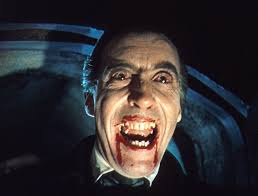
One of the most popular stories ever told, Dracula has been re-created for the stage and screen hundreds of times in the last century.
Yet it is essentially a Victorian saga, an awesome tale of thrillingly bloodthirsty vampire whose nocturnal atrocities reflect the dark underside of a supremely moralistic age. Above all, Dracula is a quintessential story of suspense and horror, boasting one of the most terrifying characters in literature: centuries-old Count Dracula, whose diabolical passions prey upon the innocent, the helpless, the beautiful.
Bram Stoker, who was also the manager of the famous actor Sir Henry Irving, wrote seventeen novels. Dracula remains his most celebrated and enduring work — even today this Gothic masterpiece has lost none of the spine-tingling impact that makes it a classic of the genre.
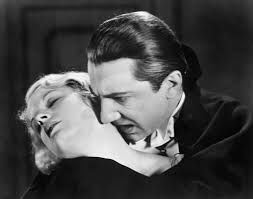
Dracula Bite
Dracula’s arrival in Whitby!
“But, strangest of all, the very instant the shore was touched, an immense dog sprang up on deck from below … and running forward, jumped from the bow on to the sand. Making straight for the steep cliff, where the churchyard hangs over the laneway to the East Pier … it disappeared in the darkness.”
from Dracula by Bram Stoker, 1897
Black Dog
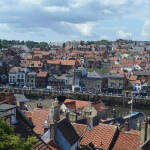
Looking across the harbour toward Whitby’s East Cliff, you can see the view that inspired the fertile imagination of author Bram Stoker, who stayed in the Royal Hotel on the western side of Whitby while writing his famous novel.
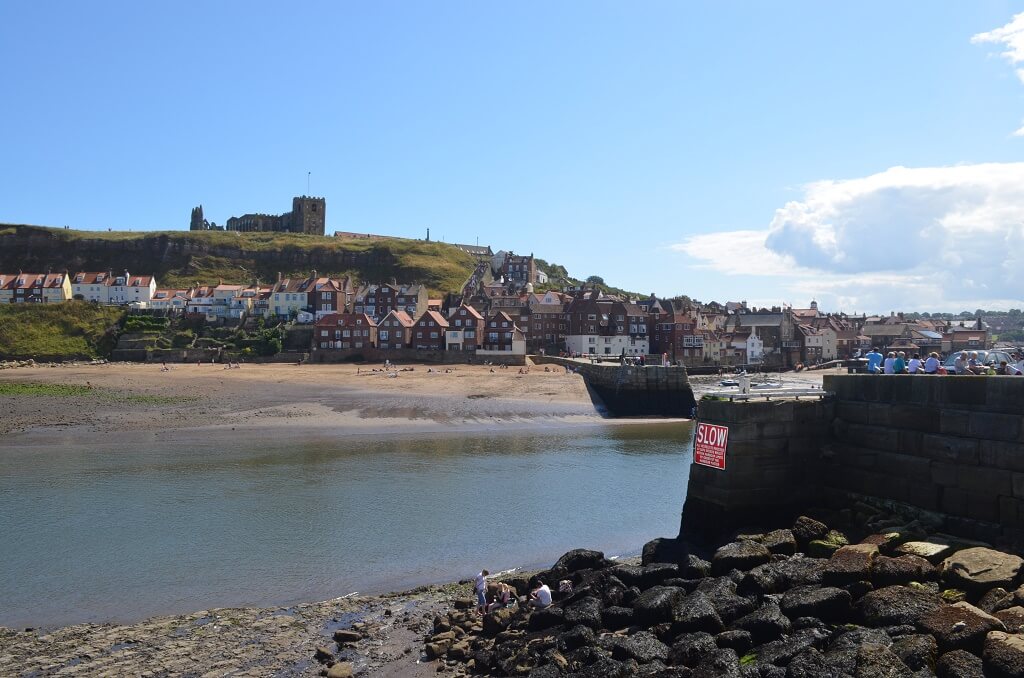
St Mary’s Church across the river in Whitby
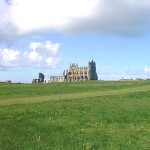
The extract is from a critical point in the book’s story-line, where the Russian schooner Demeter raced across the harbour before the blast of a massive storm, with its dead captain lashed to the helm, and crashed into the pier just under Whitby’s East Cliff and Whitby Abbey, whereupon the immense dog leapt onto English soil.
The black dog was known to be one of the many forms into which a vampire could transform itself.
Count Dracula had arrived in England.